Getting Started
How Meshtastic Works
Meshtastic creates a mesh network where devices communicate using LoRaLoRaA low-power, long-range wireless communication technology used by Meshtastic devices to enable communication over distances of several kilometers without the need for cellular, Wi-Fi, or other traditional network infrastructures. radio. Connect your phone or computer to a radio via Bluetooth, Wi-Fi, or USBUSB (Universal Serial Bus). The wired connection used to power a device, flash firmware onto it, and communicate with it over serial. — and communicate with others across vast distances without any internet or cell service.
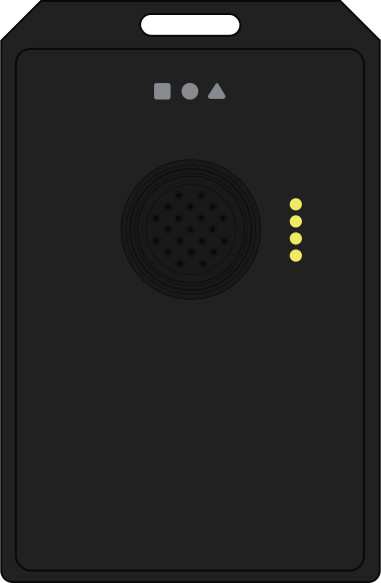
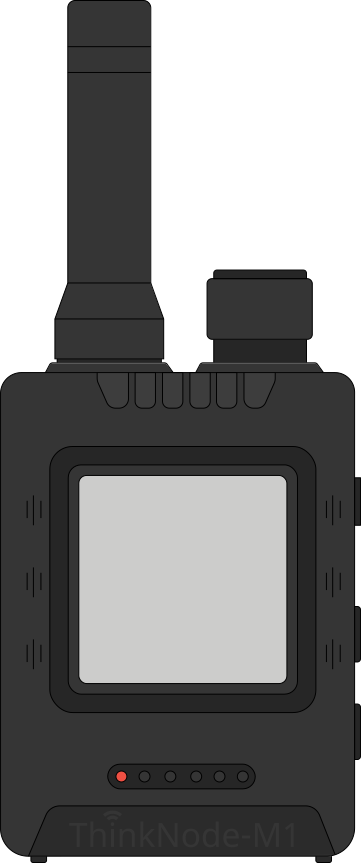
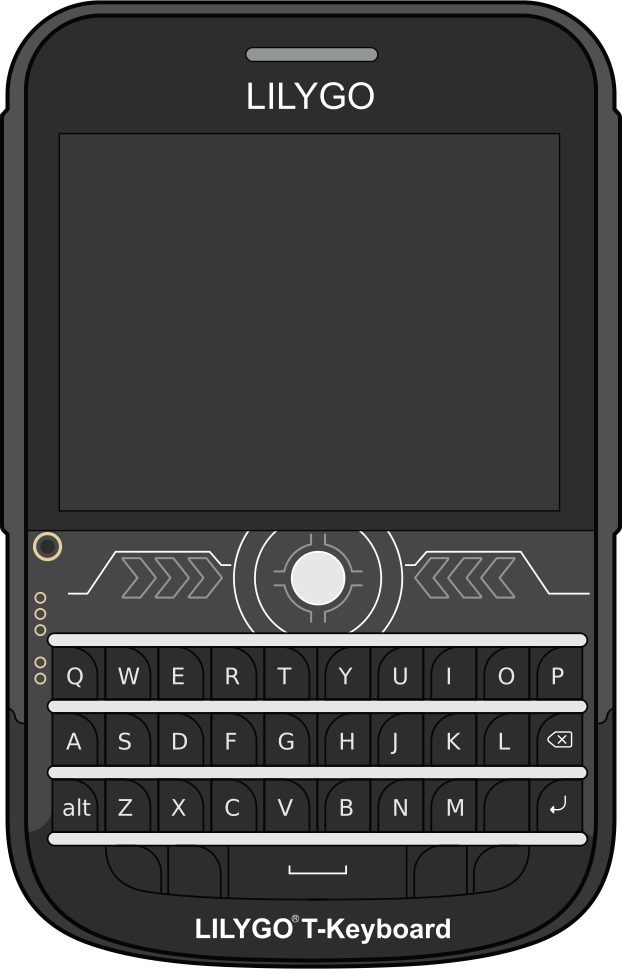
Supported Hardware
Before you begin, it's important to determine which kind of hardware you're using. Meshtastic works closely with our Partners and Backers who produce officially supported hardware. These devices are tested, documented, and recommended for the best Meshtastic experience.
There is also a wide range of community supported hardware available; however, these devices are not officially supported by Meshtastic. Please reach out to the community via Discord for assistance.
Below you'll find examples of supported hardware organized by MCUMCU (Microcontroller Unit). The microcontroller that runs the firmware on a device. The hardware tables list the MCU for each supported board. type. Once you've identified your device, we'll walk you through verifying your data cable, flashing the firmware, and connecting and configuring your device.
ESP32
The ESP32ESP32A chipset of microcontroller made/designed by Espressif, used by a number of devices. Higher power usage than nRF52, but often cheaper and supports Wi-Fi if desired. chip is equipped with both Wi-Fi and Bluetooth, making it ideal for devices that need web interface access or Wi-Fi-based configuration. ESP32ESP32A chipset of microcontroller made/designed by Espressif, used by a number of devices. Higher power usage than nRF52, but often cheaper and supports Wi-Fi if desired.-S3 variants offer improved performance.
Partner Hardware
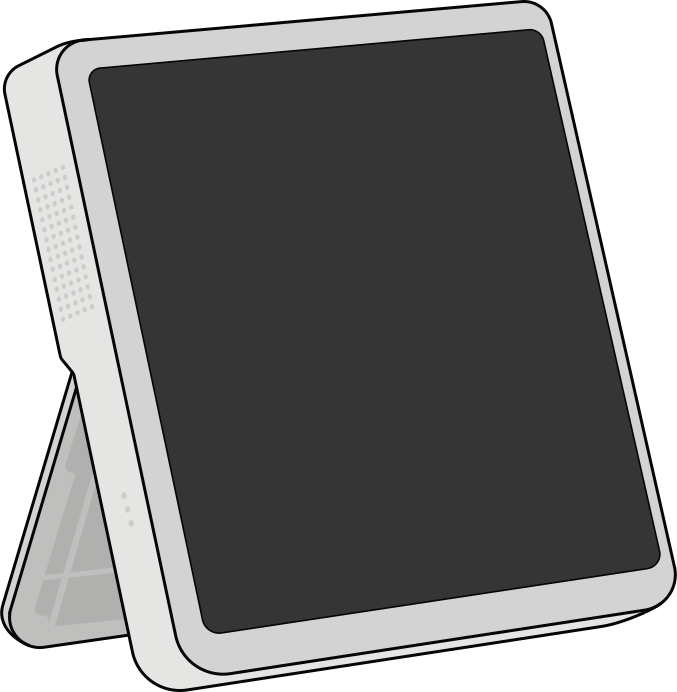
Seeed Studio
SenseCAP Indicator — 4" touchscreen driven by ESP32ESP32A chipset of microcontroller made/designed by Espressif, used by a number of devices. Higher power usage than nRF52, but often cheaper and supports Wi-Fi if desired.-S3 and RP2040rp2040A microcontroller chip developed by Raspberry Pi, featuring dual ARM Cortex-M0+ processors. Dual-MCUMCU (Microcontroller Unit). The microcontroller that runs the firmware on a device. The hardware tables list the MCU for each supported board.
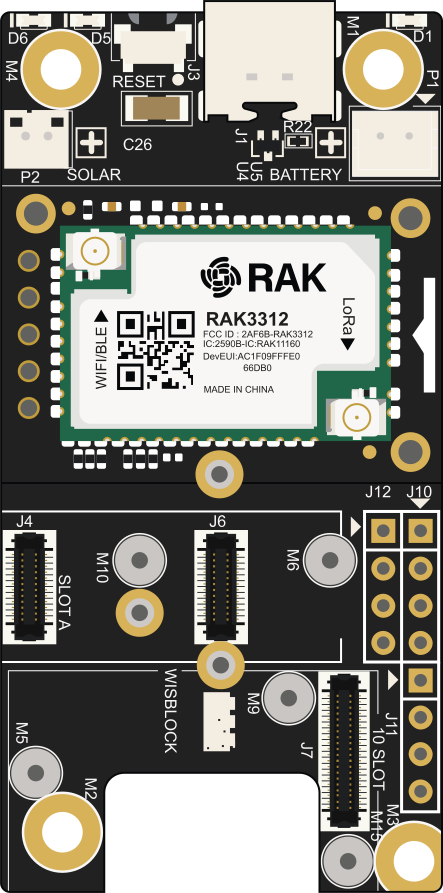
RAK Wireless
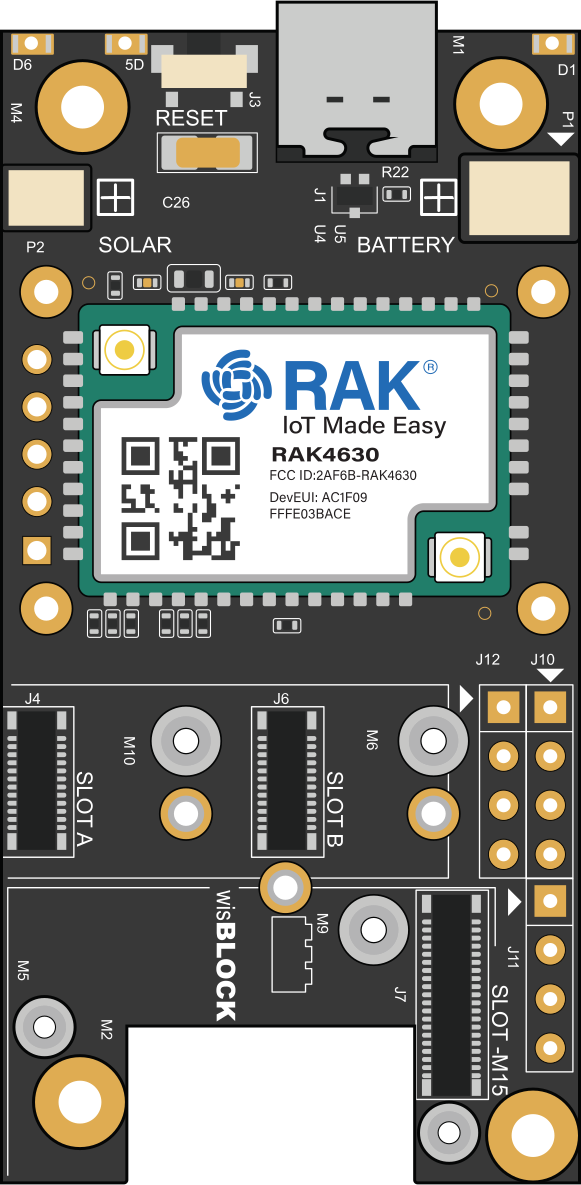
RAK3312 Core module — ESP32ESP32A chipset of microcontroller made/designed by Espressif, used by a number of devices. Higher power usage than nRF52, but often cheaper and supports Wi-Fi if desired.-S3-based WisBlock modular core
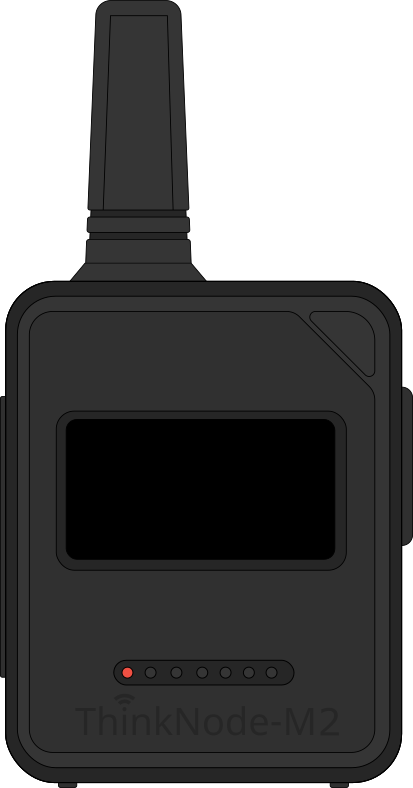
Elecrow
ThinkNode M2 — Portable ESP32ESP32A chipset of microcontroller made/designed by Espressif, used by a number of devices. Higher power usage than nRF52, but often cheaper and supports Wi-Fi if desired.-S3 device built for outdoor use
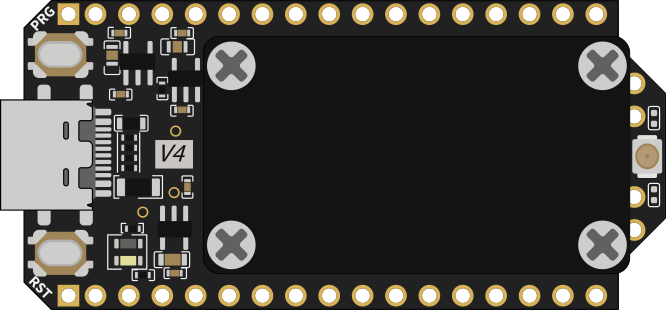
HELTEC®
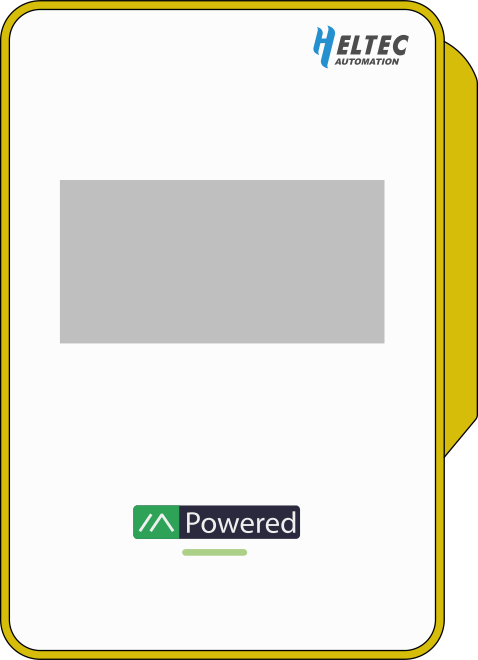
LoRa32 V4 — ESP32ESP32A chipset of microcontroller made/designed by Espressif, used by a number of devices. Higher power usage than nRF52, but often cheaper and supports Wi-Fi if desired.-S3 board with built-in 0.96 inch OLEDOLED (Organic Light-Emitting Diode). A display type used on many Meshtastic devices. The OLED Type setting selects which panel driver the firmware uses. display
LILYGO®
T-Deck / T-Deck Plus / T-Deck Pro — Standalone devices with screen and keyboard
Backer Hardware
B&Q Consulting
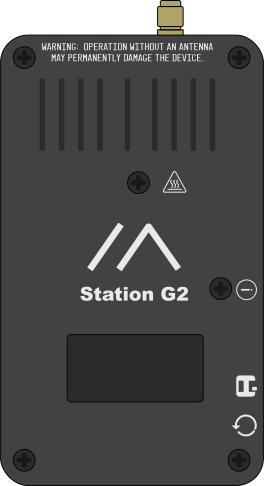
Station G2 — High power LoRaLoRaA low-power, long-range wireless communication technology used by Meshtastic devices to enable communication over distances of several kilometers without the need for cellular, Wi-Fi, or other traditional network infrastructures. transceiver for licensed ham operation
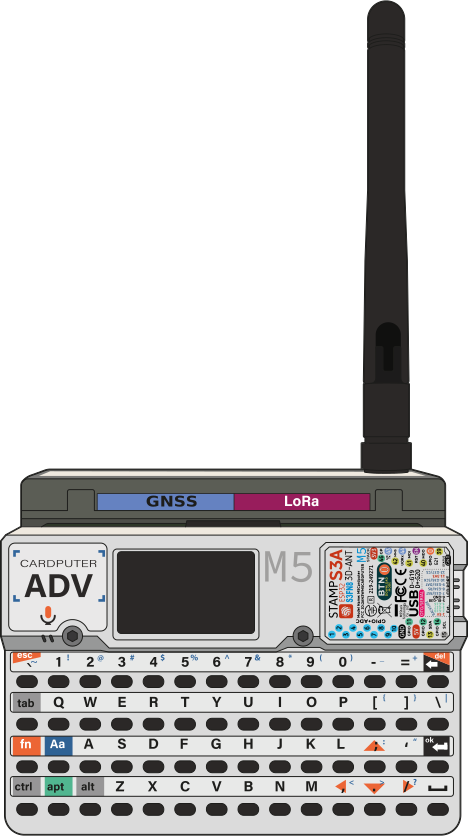
M5Stack
Cardputer Mesh Kit — Pocket messaging terminal with keyboard, LoRaLoRaA low-power, long-range wireless communication technology used by Meshtastic devices to enable communication over distances of several kilometers without the need for cellular, Wi-Fi, or other traditional network infrastructures. cap, and GNSSGNSS (Global Navigation Satellite System). A multi-constellation satellite positioning receiver. Hardware listing GNSS support typically receives GPS, BeiDou, GLONASS and QZSS.
nRF52
The nRF52nRF52A microcontroller chipset made by Nordic, used by several devices such as the RAK Meshtastic Starter Kit and the Lilygo T-Echo. Lower power usage than ESP32. chip is much more power efficient than the ESP32ESP32A chipset of microcontroller made/designed by Espressif, used by a number of devices. Higher power usage than nRF52, but often cheaper and supports Wi-Fi if desired. chip and easier to update via UF2 bootloader, but is only equipped with Bluetooth (no Wi-Fi). Ideal for battery-powered and solar deployments.
Partner Hardware
Seeed Studio
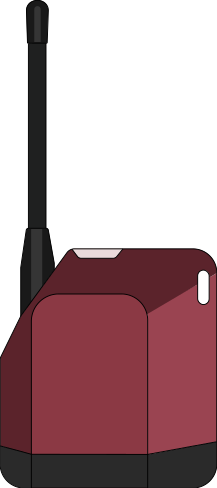
Card Tracker T1000-E — IP65IP65An enclosure rating under IEC 60529. Dust-tight, and protected against low-pressure water jets from any direction.-rated card-sized tracker with GPSGPS (Global Positioning System). A satellite positioning system. A node with a GPS module determines its own location and can report that position to the mesh.
RAK Wireless
WisMesh Tag — Portable location tracker with IP66IP66An enclosure rating under IEC 60529. Dust-tight, and protected against powerful water jets. rating
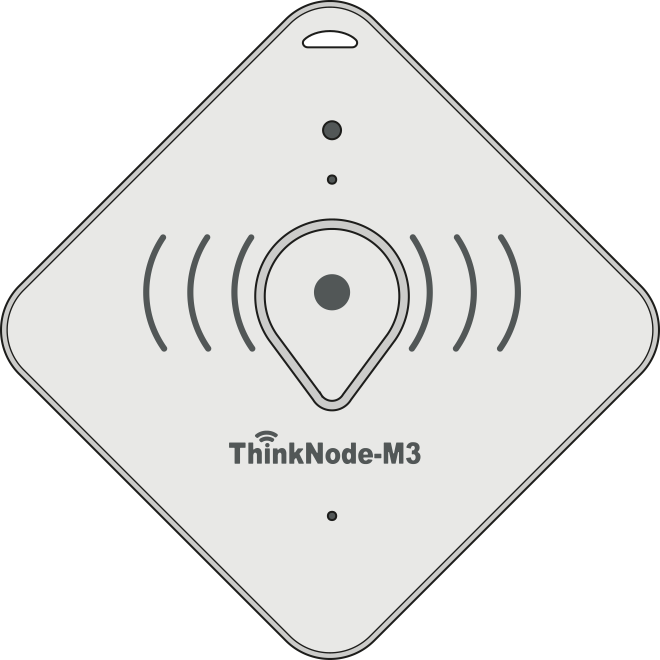
Elecrow
ThinkNode M3 — nRF52840nRF52840A Nordic microcontroller from the nRF52 family, used in devices such as the RAK WisBlock core modules. Provides Bluetooth LE 5.0 and very low power consumption. with LR1110LR1110A Semtech LoRa transceiver, used in devices such as the Elecrow ThinkNode M3 and M4. radio and GPSGPS (Global Positioning System). A satellite positioning system. A node with a GPS module determines its own location and can report that position to the mesh.
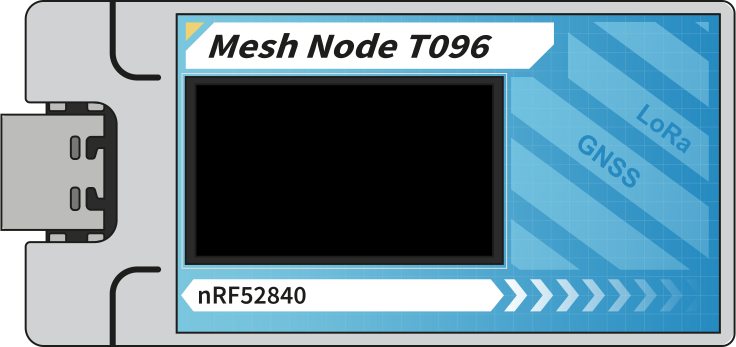
HELTEC®
Mesh Node T096 — Ultra-low-power nRF52840nRF52840A Nordic microcontroller from the nRF52 family, used in devices such as the RAK WisBlock core modules. Provides Bluetooth LE 5.0 and very low power consumption. node with color TFT display and GNSSGNSS (Global Navigation Satellite System). A multi-constellation satellite positioning receiver. Hardware listing GNSS support typically receives GPS, BeiDou, GLONASS and QZSS.
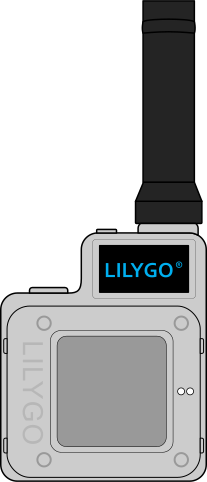
LILYGO®
T-Echo — All-in-one unit with E-Ink screen, GPSGPS (Global Positioning System). A satellite positioning system. A node with a GPS module determines its own location and can report that position to the mesh., and battery in injection-molded case
Backer Hardware
muzi ᴡᴏʀᴋꜱ
R1 Neo — Custom-designed nRF52840nRF52840A Nordic microcontroller from the nRF52 family, used in devices such as the RAK WisBlock core modules. Provides Bluetooth LE 5.0 and very low power consumption. device with GPSGPS (Global Positioning System). A satellite positioning system. A node with a GPS module determines its own location and can report that position to the mesh.
RP2040/RP2350
The RP2040rp2040A microcontroller chip developed by Raspberry Pi, featuring dual ARM Cortex-M0+ processors. and RP2350rp2350A microcontroller chip developed by Raspberry Pi, featuring dual ARM Cortex-M33 or Hazard3 RISC-V processors. are dual-core chips developed by Raspberry Pi. Cost-effective options for DIY projects.
Partner Hardware
RAK Wireless
- RAK11310 Core module — RP2040rp2040A microcontroller chip developed by Raspberry Pi, featuring dual ARM Cortex-M0+ processors.-based WisBlock modular core with SX1262SX1262A Semtech sub-GHz LoRa transceiver, used in most current Meshtastic hardware and recommended over the older SX127x series.
Community Supported
- Raspberry Pi Pico + Waveshare LoRaLoRaA low-power, long-range wireless communication technology used by Meshtastic devices to enable communication over distances of several kilometers without the need for cellular, Wi-Fi, or other traditional network infrastructures. Module (Note: Bluetooth on the Pico W is not yet supported by Meshtastic)
STM32
The STM32WL from STMicroelectronics puts an Arm Cortex-M4 and a Semtech SX126x radio on one chip — the lowest part count and power draw of any Meshtastic target, with no Wi-Fi or Bluetooth.
Due to low flash memory and RAM, a number of features have been excluded from STM32WL firmware by default (specific variants may re-enable specific features).
Features excluded from STM32WL firmware by default
- ATAK/TAK forwarding
- Codec2 audio
- MQTT
- Remote Hardware module
- Waypoints
- On-device display and menu UI
- Input peripherals (rotary encoders, trackballs, buttons/keyboards) and buzzer
- Power monitoring and power-metrics telemetry
- Timezone database
- RTTTL ringtones
- Signed-packet authenticity policy
Community Supported
- RAK3172/RAK3372 Core module — STM32WLE5 WisBlock module for embedding into custom hardware
- Seeed Wio-E5 — STM32WLE5 wireless module, mini dev board, and dev kit
- STMicroelectronics Nucleo-WL55JC — Official STM32WL evaluation board with onboard ST-LINK
If your device is not listed above, please review our supported devices to determine which MCUMCU (Microcontroller Unit). The microcontroller that runs the firmware on a device. The hardware tables list the MCU for each supported board. your device has or contact us in Discord with any questions.
Verify Data Cable
Never power on the radio without attaching an antenna as doing so could damage the radio chip!
Prior to connecting your Meshtastic device to the computer, you should perform the following basic checks.
Some cables only provide charging, verify that your cable is also capable of transferring data before proceeding. To check if your cable can also transfer data, try connecting it to another device (like a phone) and see if you can copy a file to or from it. If the file transfer works, then your cable is also able to transfer data and you can continue.
Install Serial Drivers
nRF52nRF52A microcontroller chipset made by Nordic, used by several devices such as the RAK Meshtastic Starter Kit and the Lilygo T-Echo. Lower power usage than ESP32./RP2040rp2040A microcontroller chip developed by Raspberry Pi, featuring dual ARM Cortex-M0+ processors./RP2350rp2350A microcontroller chip developed by Raspberry Pi, featuring dual ARM Cortex-M33 or Hazard3 RISC-V processors. devices typically do not require serial drivers. They use the UF2 bootloader which makes the devices appear as flash drives. Do NOT download the USBUSB (Universal Serial Bus). The wired connection used to power a device, flash firmware onto it, and communicate with it over serial. device drivers unless required to install UF2 support.
If you require serial drivers installed on your computer, please choose one of the options below and install it before continuing.
Flash Firmware
After completing the previous steps, you can now flash the Meshtastic firmware onto your device. To proceed, select the appropriate device type for your device.
Connect and Configure Device
After flashing the Meshtastic firmware onto your device, you can now move on to initial configuration.