Heltec® LoRa 32 Peripherals
- GPS Module
GPS Module
Introduction
This guide outlines the process of enhancing the Heltec ESP32ESP32A chipset of microcontroller made/designed by Espressif, used by a number of devices. Higher power usage than nRF52, but often cheaper and supports Wi-Fi if desired. V3 board by integrating a GT-U7 GPSGPS (Global Positioning System). A satellite positioning system. A node with a GPS module determines its own location and can report that position to the mesh. Module, although almost any supported GNSSGNSS (Global Navigation Satellite System). A multi-constellation satellite positioning receiver. Hardware listing GNSS support typically receives GPS, BeiDou, GLONASS and QZSS. module can be integrated in the same way. The addition of this module provides precise GPSGPS (Global Positioning System). A satellite positioning system. A node with a GPS module determines its own location and can report that position to the mesh. capabilities and a real-time clock (RTC), eliminating the need for WiFi or a smartphone for time tracking. This enhancement is particularly beneficial for the mesh, where tracking the duration since the last seen device is crucial.
However, it's important to note that the GPSGPS (Global Positioning System). A satellite positioning system. A node with a GPS module determines its own location and can report that position to the mesh. module increases the power demand of the node. This guide helps to address this by detailing how to incorporate a switch or an N-channel MOSFETMOSFETA transistor used as an electronic switch, for example to control power to a peripheral on a board. into the setup. This enables additional firmware-controlled power management, conserving more battery life than the soft-sleep option without sacrificing functionality.
Benefits
- GPSGPS (Global Positioning System). A satellite positioning system. A node with a GPS module determines its own location and can report that position to the mesh. Capabilities: Provides the node with the ability to determine its location with high precision, which is invaluable for tracking, mapping, and various other applications requiring location data.
- Real-Time Clock (RTC): Ensures accurate timekeeping on the mesh network without relying on external time sources such as the internet or a connected smartphone.
Power Consumption Considerations
The GT-U7 module is known for its high power consumption, which can potentially shorten the battery lifespan of the node. To mitigate this, three approaches are recommended:
- Manual Switch: A simple on/off switch for the GPSGPS (Global Positioning System). A satellite positioning system. A node with a GPS module determines its own location and can report that position to the mesh. module, allowing for manual power management.
- Through-hole MOSFETMOSFETA transistor used as an electronic switch, for example to control power to a peripheral on a board.: Facilitates automatic power control through the firmware, enabling the device to turn off the GPSGPS (Global Positioning System). A satellite positioning system. A node with a GPS module determines its own location and can report that position to the mesh. module based on specific conditions or after a set period.
- SMD MOSFETMOSFETA transistor used as an electronic switch, for example to control power to a peripheral on a board.: As above, but in a smaller volume and space envelope and with a marginally lower power consumption when in use.
Notes on previous versions of these instructions
Previous versions of these instructions specified using a 2N2222a power transistor to control the power. In addition, it showed the transistor being used to control the power from the "high side" (i.e. between the Heltec Vcc and the GPSGPS (Global Positioning System). A satellite positioning system. A node with a GPS module determines its own location and can report that position to the mesh. Vin). While this method will work for some boards, it is not ideal to use an NPN transistor to switch the "high side" of the load like this.
The current version of the guide now instructs using either a surface mount or through-hole MOSFETMOSFETA transistor used as an electronic switch, for example to control power to a peripheral on a board. to switch the ground ("low side") of the GPSGPS (Global Positioning System). A satellite positioning system. A node with a GPS module determines its own location and can report that position to the mesh. module. This allows the MOSFETMOSFETA transistor used as an electronic switch, for example to control power to a peripheral on a board. to operate in the fully saturated condition, and MOSFETsMOSFETA transistor used as an electronic switch, for example to control power to a peripheral on a board. will have a lower power consumption themselves than a power transistor. As the ground for the two parts will now be isolated, it is important that no parts of the GPSGPS (Global Positioning System). A satellite positioning system. A node with a GPS module determines its own location and can report that position to the mesh. module, the antenna or any shielding shell are able to contact the ground for the Heltec board.
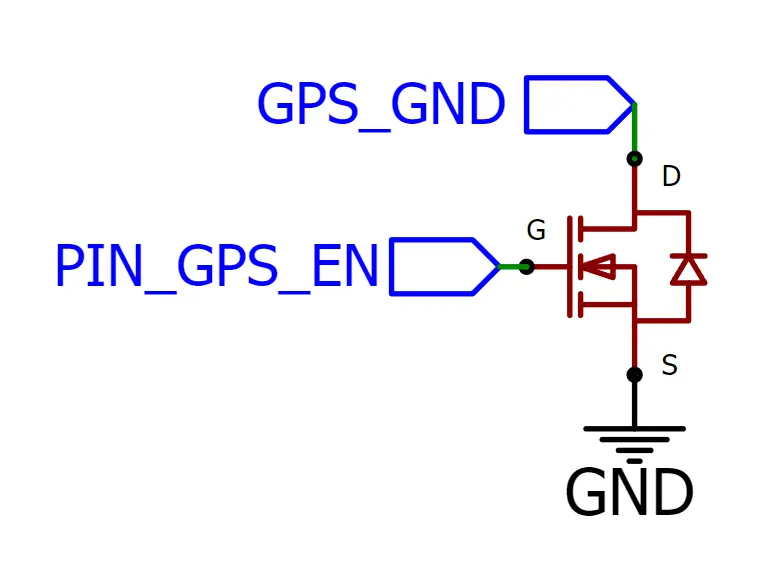
The essential connections for the NPN MOSFETMOSFETA transistor used as an electronic switch, for example to control power to a peripheral on a board. are shown in the schematic below.

Materials Needed
- Heltec ESP32ESP32A chipset of microcontroller made/designed by Espressif, used by a number of devices. Higher power usage than nRF52, but often cheaper and supports Wi-Fi if desired. V3 board
- GT-U7 GPSGPS (Global Positioning System). A satellite positioning system. A node with a GPS module determines its own location and can report that position to the mesh. Module
- (Optional) Through-hole MOSFETMOSFETA transistor used as an electronic switch, for example to control power to a peripheral on a board. (note: these are harder to find in small packages than SMD MOSFETSMOSFETA transistor used as an electronic switch, for example to control power to a peripheral on a board., but any that can operate on 3.3V will be suitable, e.g. 2N7000, BS170)
- (Optional) Surface Mount MOSFETMOSFETA transistor used as an electronic switch, for example to control power to a peripheral on a board. (note: any suitable N-channel MOSFETMOSFETA transistor used as an electronic switch, for example to control power to a peripheral on a board. can be used, e.g. SI2312, AO3400a, 2N7002)
- Wires and soldering equipment
- (Optional) Switch for manual power control
Instructions (Through-Hole MOSFET)
Note: these instructions assume a 2N7000 MOSFETMOSFETA transistor used as an electronic switch, for example to control power to a peripheral on a board. is used. For other parts, always check the data sheet!
- Solder a wire from the TXD pin on the GPSGPS (Global Positioning System). A satellite positioning system. A node with a GPS module determines its own location and can report that position to the mesh. module to GPIOGPIO (General Purpose Input/Output). An uncommitted digital signal pin on a device. 48 on Heltec board. (Another GPIOGPIO (General Purpose Input/Output). An uncommitted digital signal pin on a device. pin may be chosen)
- Solder a wire from the RXD pin on the GPSGPS (Global Positioning System). A satellite positioning system. A node with a GPS module determines its own location and can report that position to the mesh. module to GPIOGPIO (General Purpose Input/Output). An uncommitted digital signal pin on a device. 47 on Heltec board. (Another GPIOGPIO (General Purpose Input/Output). An uncommitted digital signal pin on a device. pin may be chosen)
- Solder a wire from the VCC pin on the GPSGPS (Global Positioning System). A satellite positioning system. A node with a GPS module determines its own location and can report that position to the mesh. module to 3V/5V pin on Heltec board.
- Solder a wire from Right leg (lead 3, Drain) of NPN MOSFETMOSFETA transistor used as an electronic switch, for example to control power to a peripheral on a board. to GND on GPSGPS (Global Positioning System). A satellite positioning system. A node with a GPS module determines its own location and can report that position to the mesh. module.
- Solder a wire from Left leg (lead 1, Source) of NPN MOSFETMOSFETA transistor used as an electronic switch, for example to control power to a peripheral on a board. to GND on Heltec board.
- Solder a wire from Middle leg (lead 2, Gate) of NPN MOSFETMOSFETA transistor used as an electronic switch, for example to control power to a peripheral on a board. to GPIOGPIO (General Purpose Input/Output). An uncommitted digital signal pin on a device. 46 of Heltec board. (Another GPIOGPIO (General Purpose Input/Output). An uncommitted digital signal pin on a device. pin may be chosen)
- Go to Meshtastic app > Radio Configurations > Position
- Set GPS_RX_PIN to 48 (This will communicate to the TXD pin on the GPSGPS (Global Positioning System). A satellite positioning system. A node with a GPS module determines its own location and can report that position to the mesh.)
- Set GPS_TX_PIN to 47 (This will communicate to the RXD pin on the GPSGPS (Global Positioning System). A satellite positioning system. A node with a GPS module determines its own location and can report that position to the mesh.)
- Set PIN_GPS_EN to 46 (This will allow the meshtastic firmware to turn off the power on the GPSGPS (Global Positioning System). A satellite positioning system. A node with a GPS module determines its own location and can report that position to the mesh. board with the user button of the Heltec Board by pressing it 3 times)
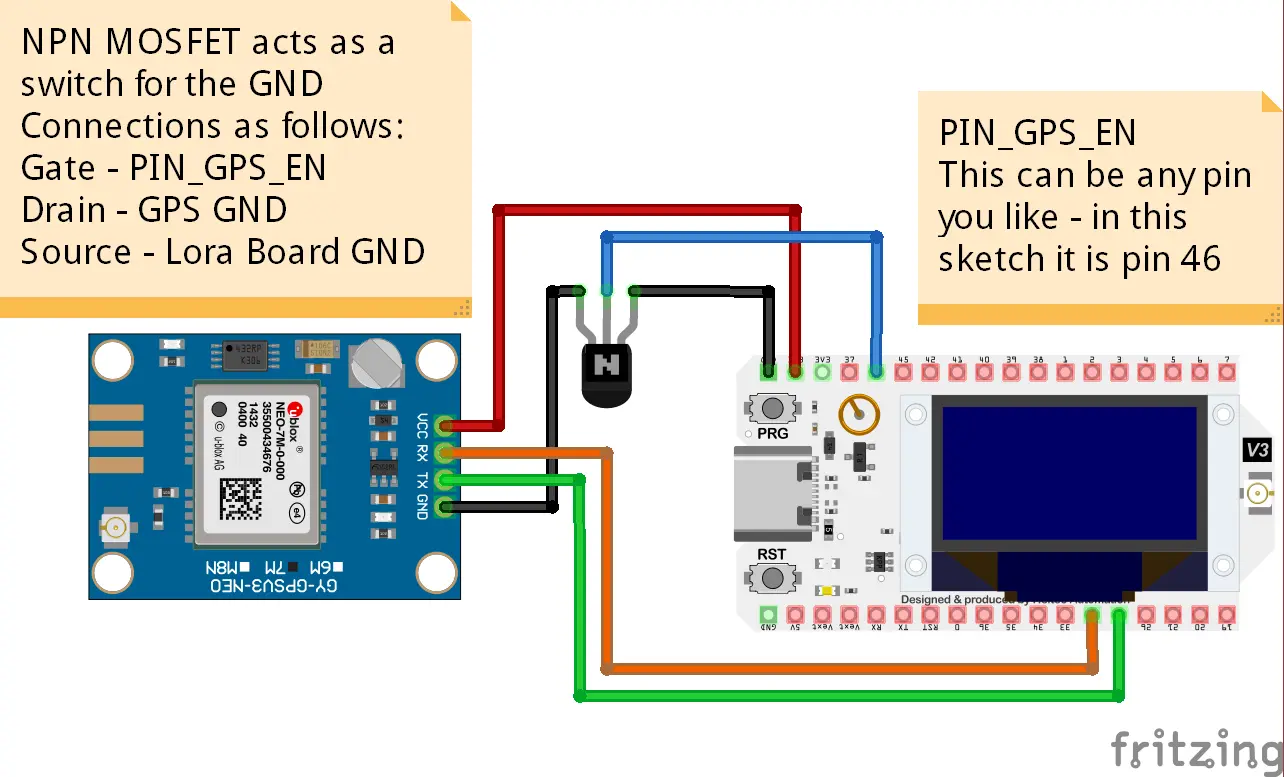
Wiring Diagram - Through-Hole
Instructions (Surface Mount MOSFET)
Note: these instructions assume an SI2312 MOSFETMOSFETA transistor used as an electronic switch, for example to control power to a peripheral on a board. is used. For other parts, always check the data sheet!
- Solder a wire from the TXD pin on the GPSGPS (Global Positioning System). A satellite positioning system. A node with a GPS module determines its own location and can report that position to the mesh. module to GPIOGPIO (General Purpose Input/Output). An uncommitted digital signal pin on a device. 48 on Heltec board. (Another GPIOGPIO (General Purpose Input/Output). An uncommitted digital signal pin on a device. pin may be chosen)
- Solder a wire from the RXD pin on the GPSGPS (Global Positioning System). A satellite positioning system. A node with a GPS module determines its own location and can report that position to the mesh. module to GPIOGPIO (General Purpose Input/Output). An uncommitted digital signal pin on a device. 47 on Heltec board. (Another GPIOGPIO (General Purpose Input/Output). An uncommitted digital signal pin on a device. pin may be chosen)
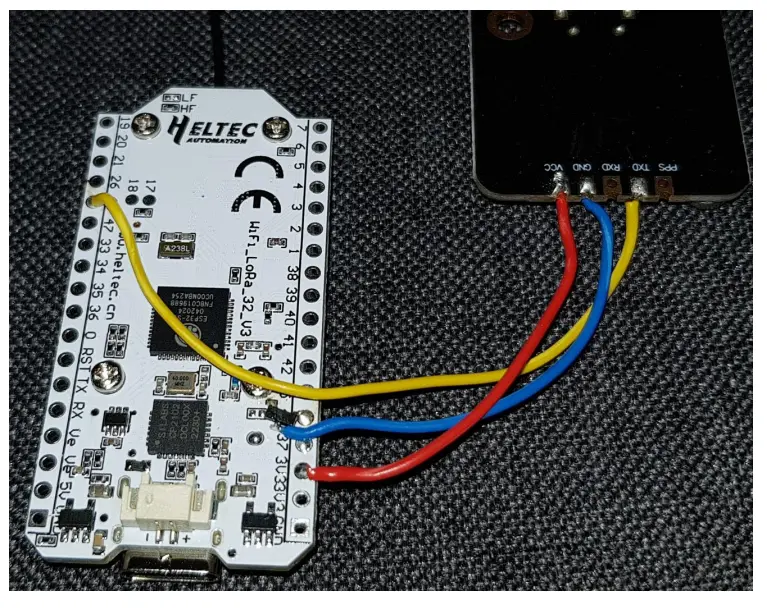
- Solder a wire from the GND pin on the GPSGPS (Global Positioning System). A satellite positioning system. A node with a GPS module determines its own location and can report that position to the mesh. module to middle pin of the SI 2312 MOSFETMOSFETA transistor used as an electronic switch, for example to control power to a peripheral on a board.
- Solder a wire from the VCC pin of the GPSGPS (Global Positioning System). A satellite positioning system. A node with a GPS module determines its own location and can report that position to the mesh. module to o 3V/5V pin on Heltec board.
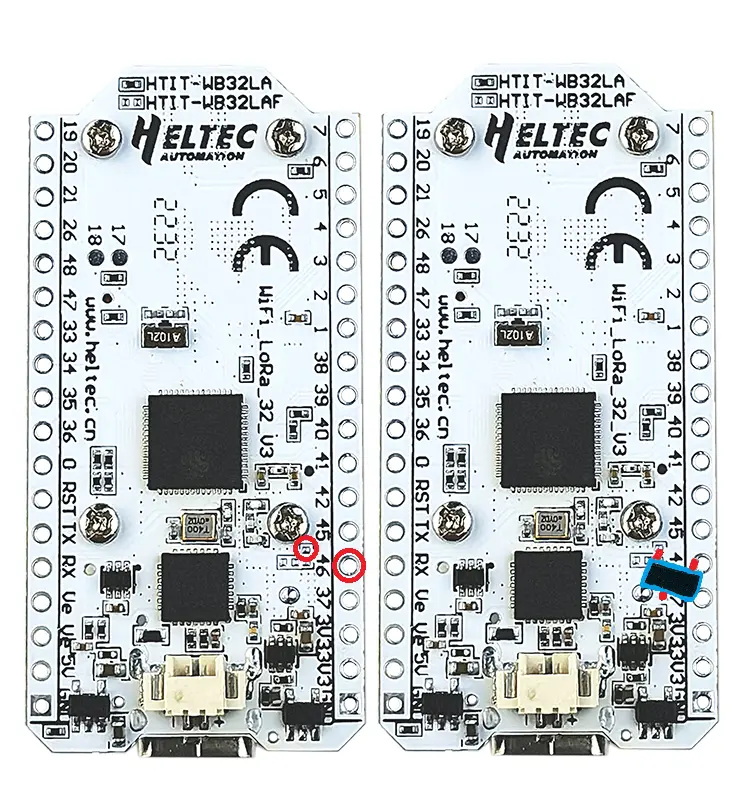
- Solder a wire from Left leg of SI2312 MOSFETMOSFETA transistor used as an electronic switch, for example to control power to a peripheral on a board. to GPIOGPIO (General Purpose Input/Output). An uncommitted digital signal pin on a device. 46 on the Heltec board.
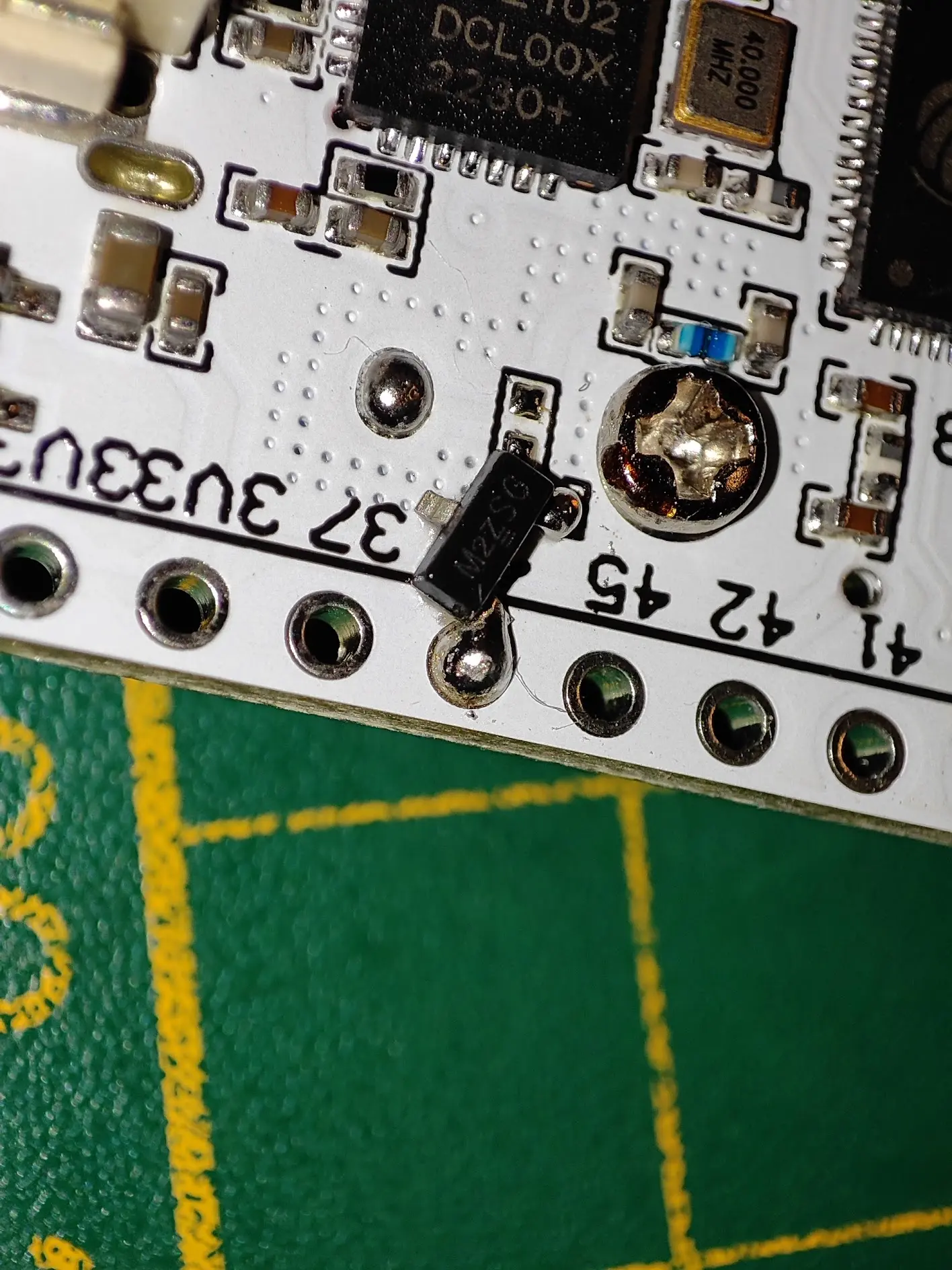
- Solder a wire from Right leg of SI2312 MOSFETMOSFETA transistor used as an electronic switch, for example to control power to a peripheral on a board. to the empty solder spot on the heltec board (see pictures).
- Go to Meshtastic app > Radio Configurations > Position
- Set GPS_RX_PIN to 48 (This will communicate to the TXD pin on the GPSGPS (Global Positioning System). A satellite positioning system. A node with a GPS module determines its own location and can report that position to the mesh.)
- Set GPS_TX_PIN to 47 (This will communicate to the RXD pin on the GPSGPS (Global Positioning System). A satellite positioning system. A node with a GPS module determines its own location and can report that position to the mesh.)
- Set PIN_GPS_EN to 46 (This will allow the meshtastic firmware to turn off the power on the GPSGPS (Global Positioning System). A satellite positioning system. A node with a GPS module determines its own location and can report that position to the mesh. board with the user button of the Heltec Board by pressing it 3 times)
- Ensure that the ground on the GPSGPS (Global Positioning System). A satellite positioning system. A node with a GPS module determines its own location and can report that position to the mesh. module does not contact the ground of the Heltec board, or any other component linked to the Heltec ground. This includes antenna covers, battery connectors, etc. Failure to ensure they are separated may lead to the MOSFETMOSFETA transistor used as an electronic switch, for example to control power to a peripheral on a board. being bypassed.
Photographs and Diagrams - SMD


Troubleshooting Tips
If the GPSGPS (Global Positioning System). A satellite positioning system. A node with a GPS module determines its own location and can report that position to the mesh. module does not power on, check the connections to the transistor and ensure that the middle pin is properly configured in the firmware settings. If the message "GPSGPS (Global Positioning System). A satellite positioning system. A node with a GPS module determines its own location and can report that position to the mesh. is Disabled" appears, press the user button on the Heltec board three times to enable it. If the message "No GPSGPS (Global Positioning System). A satellite positioning system. A node with a GPS module determines its own location and can report that position to the mesh. Present" appears, check that the TXD and RXD are correctly configured. If the message "No GPSGPS (Global Positioning System). A satellite positioning system. A node with a GPS module determines its own location and can report that position to the mesh. Lock" appears, move the node to another location with access to the sky for a bit to lock on properly. If the location is not accurate, walk around to allow the GPSGPS (Global Positioning System). A satellite positioning system. A node with a GPS module determines its own location and can report that position to the mesh. to properly lock on.
Conclusion
By following this guide, the Heltec ESP32ESP32A chipset of microcontroller made/designed by Espressif, used by a number of devices. Higher power usage than nRF52, but often cheaper and supports Wi-Fi if desired. V3 board can be enhanced with valuable GPSGPS (Global Positioning System). A satellite positioning system. A node with a GPS module determines its own location and can report that position to the mesh. capabilities and an RTC, while effectively managing power consumption. Whether for a hobby project or a more serious application, these additions significantly expand the potential of the device.