unPhone
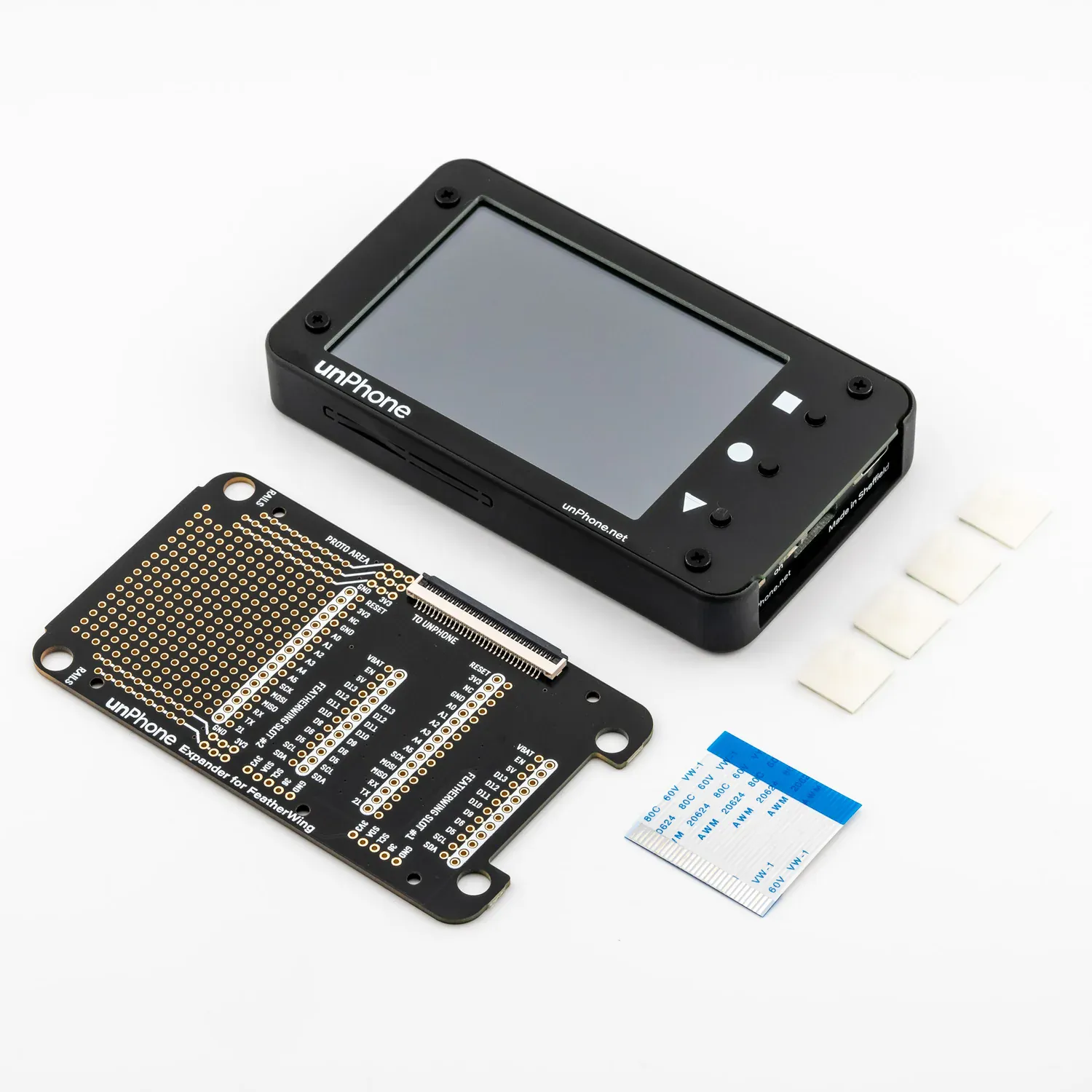
The unPhone is a versatile open hardware and open-source software development device designed to provide seamless connectivity and expandability. Developed by the University of Sheffield, in partnership with Pimoroni and Gareth Coleman, it features a touchscreen, battery, case, and antenna, and more, making it ideal for various projects.
For more comprehensive information on the unPhone, please visit the project's website at unphone.net.
Specifications
- MCUMCU (Microcontroller Unit). The microcontroller that runs the firmware on a device. The hardware tables list the MCU for each supported board.
- ESP32ESP32A chipset of microcontroller made/designed by Espressif, used by a number of devices. Higher power usage than nRF52, but often cheaper and supports Wi-Fi if desired.-S3-WROOM-1
- Bluetooth 5.0
- Wi-Fi support
- ESP32ESP32A chipset of microcontroller made/designed by Espressif, used by a number of devices. Higher power usage than nRF52, but often cheaper and supports Wi-Fi if desired.-S3-WROOM-1
- LoRaLoRaA low-power, long-range wireless communication technology used by Meshtastic devices to enable communication over distances of several kilometers without the need for cellular, Wi-Fi, or other traditional network infrastructures. Transceiver
- HopeRF RF950W
- Frequency options
- 868 MHzMHz (Megahertz). A unit of frequency equal to one million hertz (cycles per second), used to specify the operating frequency of LoRa devices in the Meshtastic network, affecting range and data rate.
- Navigation Module
- Not included
- Antenna
- Integrated
- Connectors
- USBUSB (Universal Serial Bus). The wired connection used to power a device, flash firmware onto it, and communicate with it over serial.-C
Features
- 8MB flash and 8MB PSRAM
- 3.5" (320x480) LCD resistive touchscreen
- IR LEDsLED (Light-Emitting Diode). An indicator light on a device. The External Notification module can drive one in response to mesh activity.
- 1200mAh LiPo battery with USBUSB (Universal Serial Bus). The wired connection used to power a device, flash firmware onto it, and communicate with it over serial.-C charging
- Vibration motor
- Compass/Accelerometer (both 3-axis)
- SD card slot
- Expander board that supports two Featherwing sockets and a prototyping area
Flashing
To flash ESP32ESP32A chipset of microcontroller made/designed by Espressif, used by a number of devices. Higher power usage than nRF52, but often cheaper and supports Wi-Fi if desired.-S3 devices like the unPhone, you typically need to place them in Espressif's firmware download mode. Use the "1200bps reset" button in the web flasher to do this. If this method does not work for any reason, you can follow the manual process below.
Do not proceed unless an antenna is connected to avoid possible damage to the device's radio.
The following process will manually place the device into the Espressif Firmware Download mode:
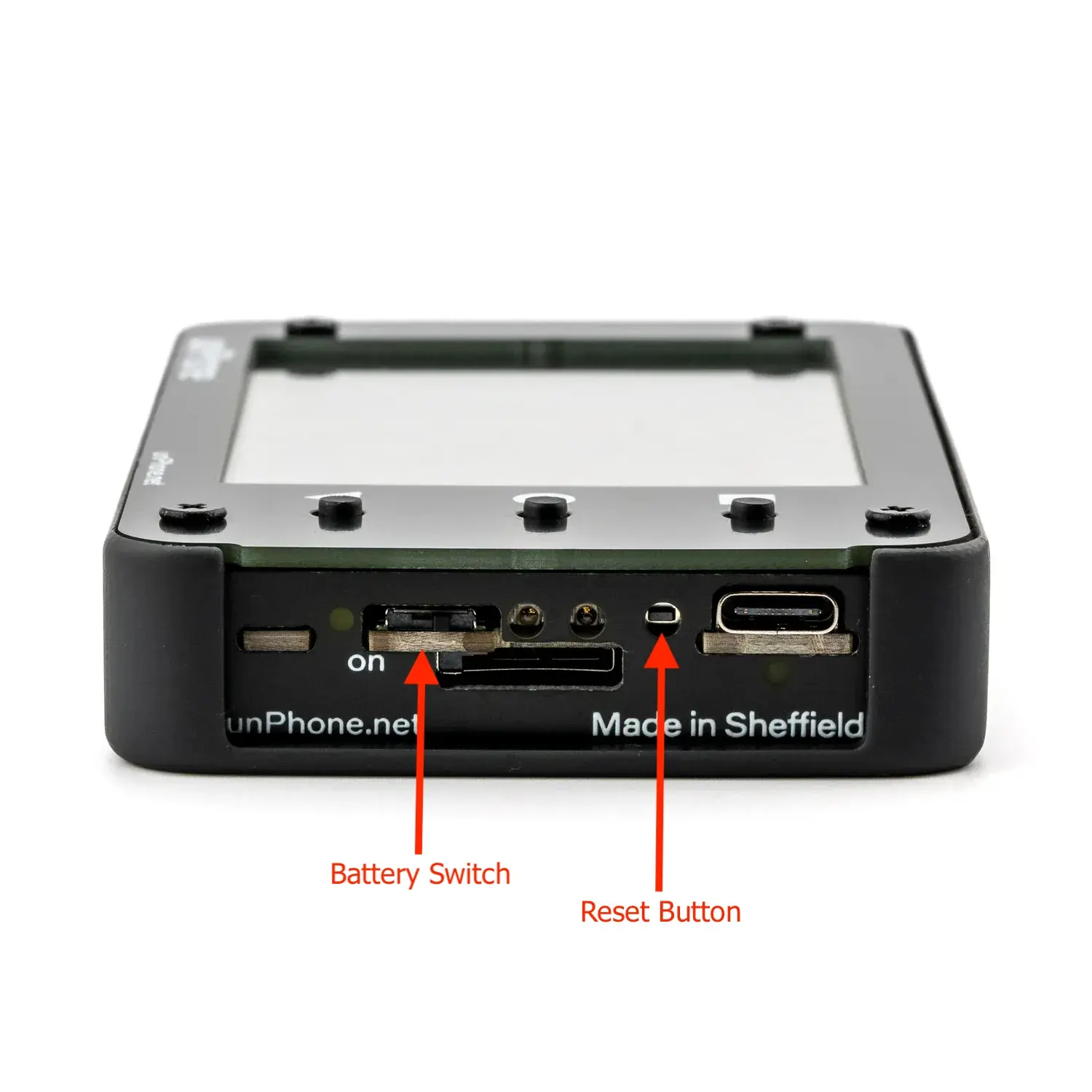
- Ensure the device is plugged in and powered on by switching the battery switch to
ON. - Press and hold the center (circle) button.
- While holding the center (circle) button, press the reset button on the side. See image.
- After 2-3 seconds, release center (circle) button.
With the device now in the Espressif Firmware Download mode, you can proceed with flashing using one of the supported flashing methods. It's generally recommended to use the Web Flasher. You can select "unPhone" from the device drop-down.
Resources
- Firmware file:
firmware-unphone-X.X.X.xxxxxxx.bin
Images